What does diamond colour mean?
When gemologists talk about diamond colour, they are referring to how close a diamond is to being completely colourless. The less colour present, the more light passes through the stone, which contributes to its brightness and sparkle.
Every diamond we sell is certified by the International Gemological Institute (IGI), so each colour grade is independently assessed and documented.
For a deeper look at how colour is assessed, see IGI's colour grading guide.
The colour scale runs from D (completely colourless) to Z (noticeable colour). Most people find that diamonds in the D to J range appear colourless or near-colourless to the naked eye, which is why we stock grades within that range and slightly beyond.
Colour grades at a glance
We stock colour grades from D (colourless) to M (faint colour). Here is what each grade looks like and what it means in practice.
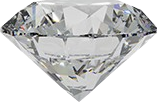
D
Colourless group. Completely colourless, the highest grade on the scale. No colour is detectable, even under magnification.
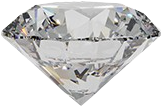
E
Colourless group. Virtually colourless, with only a trace of colour that trained gemologists can detect under controlled conditions.
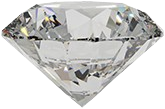
F
Colourless group. Near-identical to D and E in appearance. A slight hint of warmth is visible only to experts under comparison.
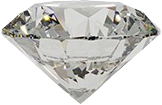
G
Near-colourless group. A subtle warmth compared to higher grades, though it typically appears colourless when set.
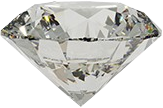
H
Near-colourless group. A soft trace of colour that is difficult to notice face-up, making it a popular choice across all shapes.
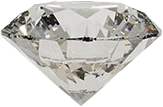
I
Near-colourless group. Faint colour is present but the diamond remains bright and lively to the naked eye.
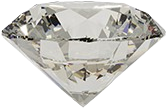
J
Near-colourless group. Noticeable warmth when compared side by side with higher grades, though it still faces up well on its own.
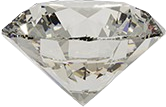
K
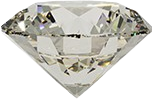
Faint colour group. Soft colour is visible to the naked eye, particularly in larger stones or against a white background.
L
Faint colour group. A visible yellow tint that can complement warm-toned settings such as yellow gold.
M
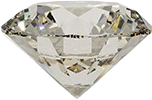
Faint colour group. A distinct yellow tint visible to the naked eye. Often chosen for warm-toned or vintage-style settings.